|
Strategy and Policy Committee Kōmiti Rautaki me Kaupapa Here
SPC24-5 Thursday, 25 July 2024, 9.30am Council Chambers, 1484 Cameron Road, Tauranga
|

|
Strategy and Policy Committee Kōmiti Rautaki me Kaupapa Here
SPC24-5 Thursday, 25 July 2024, 9.30am Council Chambers, 1484 Cameron Road, Tauranga
|
|
25 July 2024 |
Strategy and Policy Committee
Membership:
|
Chairperson |
Mayor James Denyer |
|
Deputy Chairperson |
TBC |
|
Members |
Cr Tracey Coxhead Cr Grant Dally Cr Murray Grainger Cr Anne Henry Cr Rodney Joyce Cr Margaret Murray-Benge Deputy Mayor John Scrimgeour Cr Allan Sole Cr Don Thwaites Cr Andy Wichers |
|
Quorum |
Six (6) |
|
Frequency |
Six weekly |
Role:
· To develop and review strategies, policies, plans and bylaws to advance the strategic direction of Council and its communities.
· To ensure an integrated approach to land development (including land for housing), land use and transportation to enable, support and shape sustainable, vibrant and safe communities.
· To ensure there is sufficient and appropriate housing supply and choice in existing and new urban areas to meet current and future needs.
Scope:
· Development and review of bylaws in accordance with legislation including determination of the nature and extent of community engagement approaches to be deployed.
· Development, review and approval of strategies and plans in accordance with legislation including determination of the nature and extent of community engagement approaches to be deployed.
· Subject to compliance with legislation and the Long Term Plan, to resolve all matters of strategic policy outside of the Long Term Plan process which does not require, under the Local Government Act 2002, a resolution of Council.
· Development of District Plan changes up to the point of public notification under the Resource Management Act 1991.
· Endorsement of the Future Development Strategy and sub-regional or regional spatial plans.
· Consider and approve changes to service delivery arrangements arising from service delivery reviews required under the Local Government Act 2002 (provided that where a service delivery proposal requires an amendment to the Long Term Plan, it shall thereafter be progressed by the Annual Plan and Long Term Plan Committee).
· Where un-budgeted financial implications arise from the development or review of policies, bylaws or plans, recommend to Council any changes or variations necessary to give effect to such policies, bylaws or plans.
·
 Listen to and
receive the presentation of views by people and engage in spoken interaction in
relation to any matters Council undertakes to consult on whether under the
Local Government Act 2002 or any other Act.
Listen to and
receive the presentation of views by people and engage in spoken interaction in
relation to any matters Council undertakes to consult on whether under the
Local Government Act 2002 or any other Act.
· Oversee the development of strategies relating to sub-regional parks and sub-regional community facilities for the enhancement of community wellbeing of the Western Bay of Plenty District communities, for recommendation to Tauranga City Council and Western Bay of Plenty District Council.
· Approve Council submissions to central government, councils and other organisations, including submissions on proposed legislation, plan changes or policy statements.
· Receive and make decisions and recommendations to Council and its Committees, as appropriate, on reports, recommendations and minutes of the following:
- SmartGrowth Leadership Group
- Regional Transport Committee
- Any other Joint Committee, Forum or Working Group, as directed by Council.
· Receive and make decisions on, as appropriate, any matters of a policy or planning nature from the following:
- Waihī Beach, Katikati, Ōmokoroa, Te Puke and Maketu Community Boards.
- Community Committee.
Power to Act:
· To make all decisions necessary to fulfil the role and scope of the Committee subject to the limitations imposed.
Power to Recommend:
· To Council and/or any Committee as it deems appropriate.
Power to sub-delegate:
·
The Committee
may delegate any of its functions, duties or powers
to a subcommittee, working
group or other subordinate decision-making body subject to the restrictions within its delegations and provided that any such sub-delegation
includes a statement of purpose
and specification of task.
· Should there be insufficient time for Strategy and Policy Committee to consider approval for a final submission to an external body, the Chair has delegated authority to sign the submission on behalf of Council, provided that the final submission is reported to the next scheduled meeting of the Strategy and Policy Committee.
|
Strategy and Policy Committee Meeting Agenda |
25 July 2024 |
Notice is hereby given that a Strategy and Policy Committee Meeting will be held in the Council Chambers, 1484 Cameron Road, Tauranga on: Thursday, 25 July 2024 at 9.30am
10.1 Review of Easter Sunday Shop Trading Policy 2024
10.2 Submission on the International Visitor Conservation and Toursim Levy 2024
10.3 Submission on the Local Government (Water Services Preliminary Arrangements) Bill, June 2024
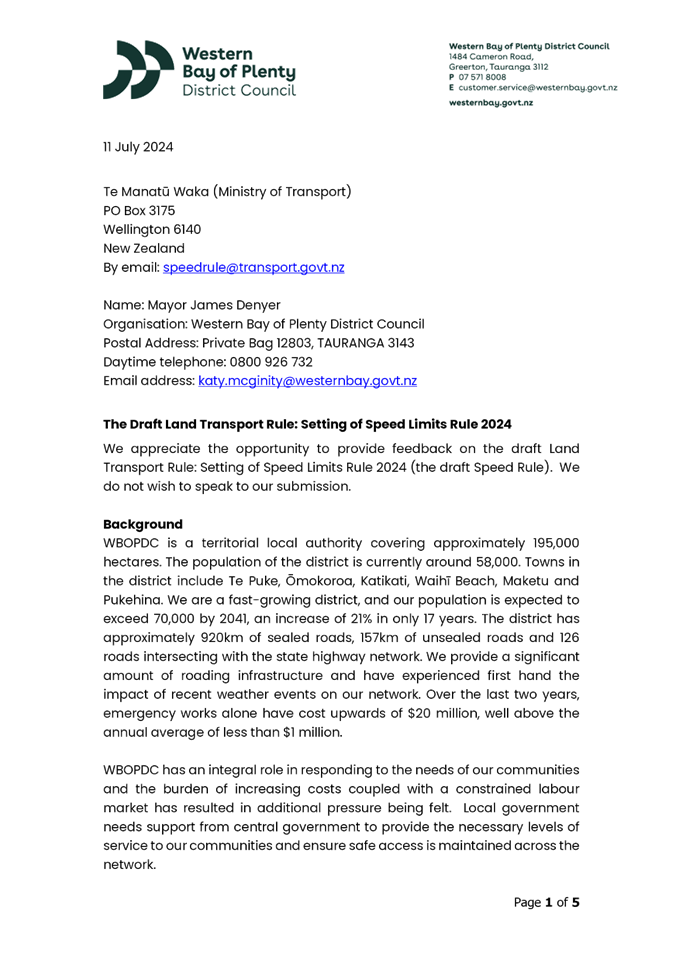
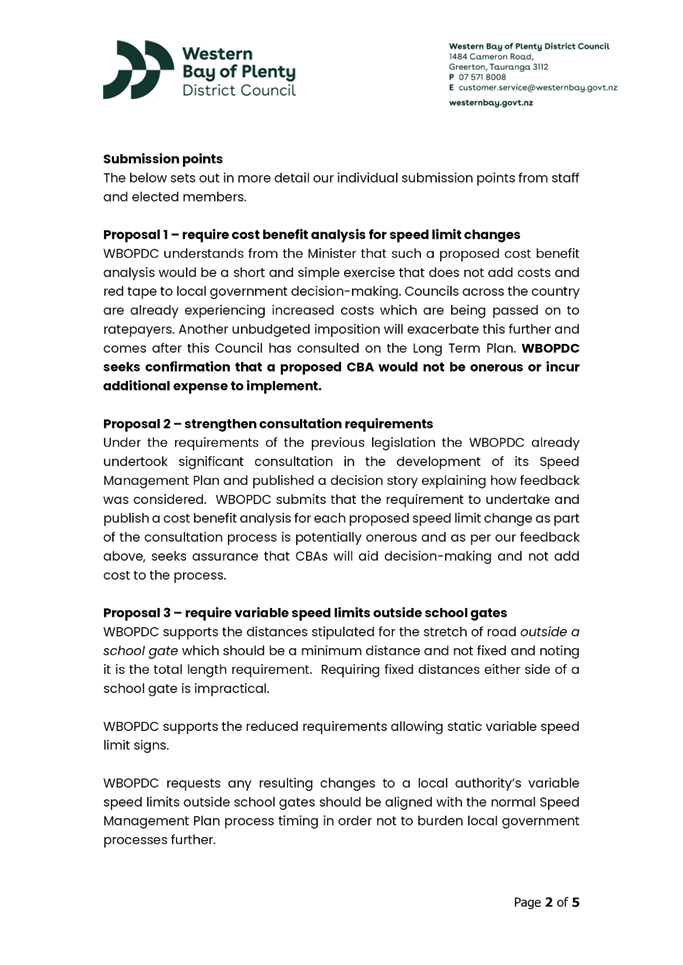
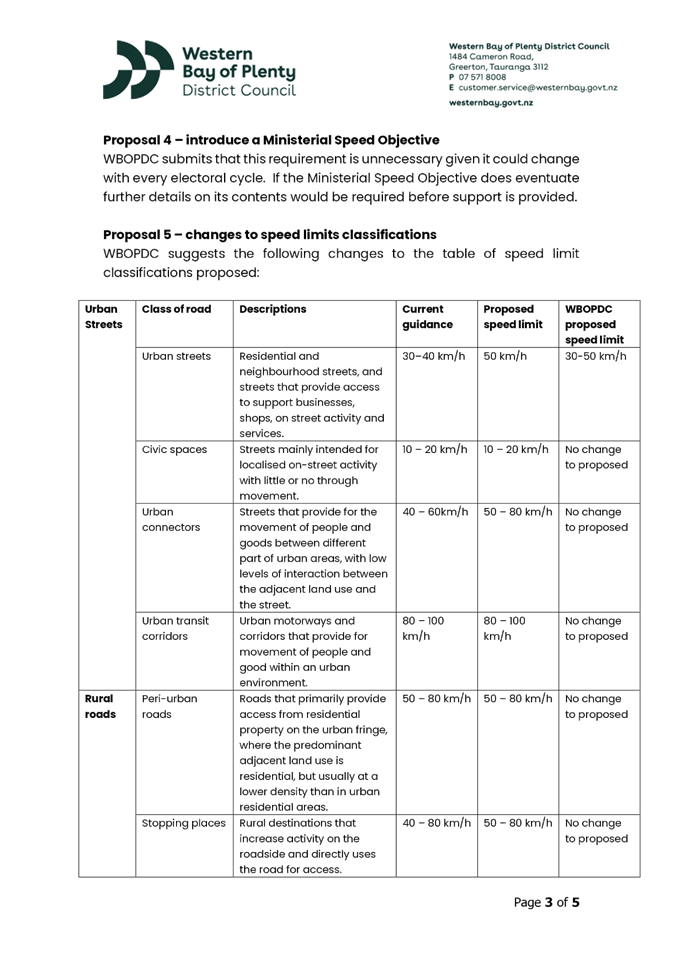
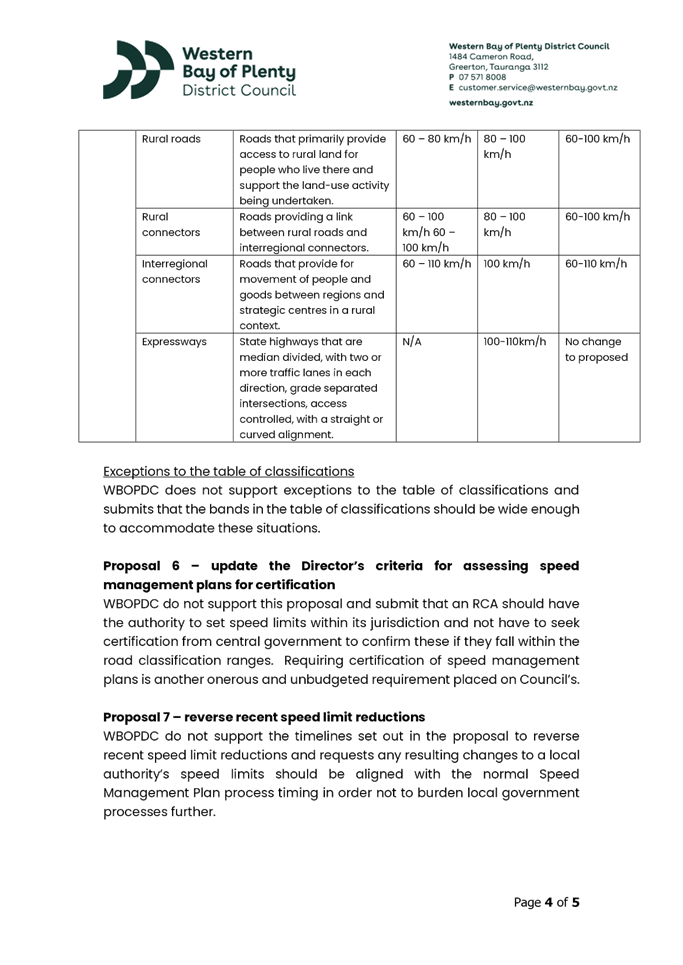
10.4 Submission on the draft Land Transport Rule - Setting of the Speed Limits 2024
|
Whakatau mai te wairua Whakawātea mai te hinengaro Whakarite mai te tinana Kia ea ai ngā mahi
Āe |
Settle the spirit Clear the mind Prepare the body To achieve what needs to be achieved. Yes |
2 Present
Members are reminded of the need to be vigilant and to stand aside from decision making when a conflict arises between their role as an elected representative and any private or other external interest that they may have.
A period of up to 30 minutes is set aside for a public forum. Members of the public may attend to address the Board for up to five minutes on items that fall within the delegations of the Board provided the matters are not subject to legal proceedings, or to a process providing for the hearing of submissions. Speakers may be questioned through the Chairperson by members, but questions must be confined to obtaining information or clarification on matters raised by the speaker. The Chairperson has discretion in regard to time extensions.
Such presentations do not form part of the formal business of the meeting, a brief record will be kept of matters raised during any public forum section of the meeting with matters for action to be referred through the customer relationship management system as a service request, while those requiring further investigation will be referred to the Chief Executive.
|
25 July 2024 |
10 Reports
10.1 Review of Easter Sunday Shop Trading Policy 2024
File Number: A6211797
Author: Rebecca Gallagher, Senior Policy Analyst
Authoriser: Rachael Davie, Deputy CEO/General Manager Strategy and Community
Executive Summary
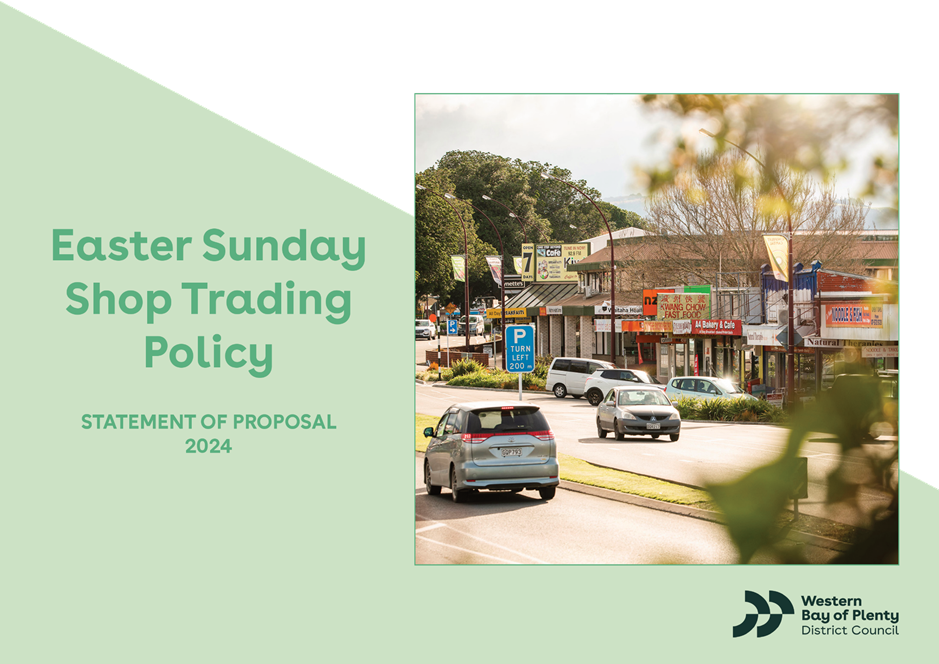
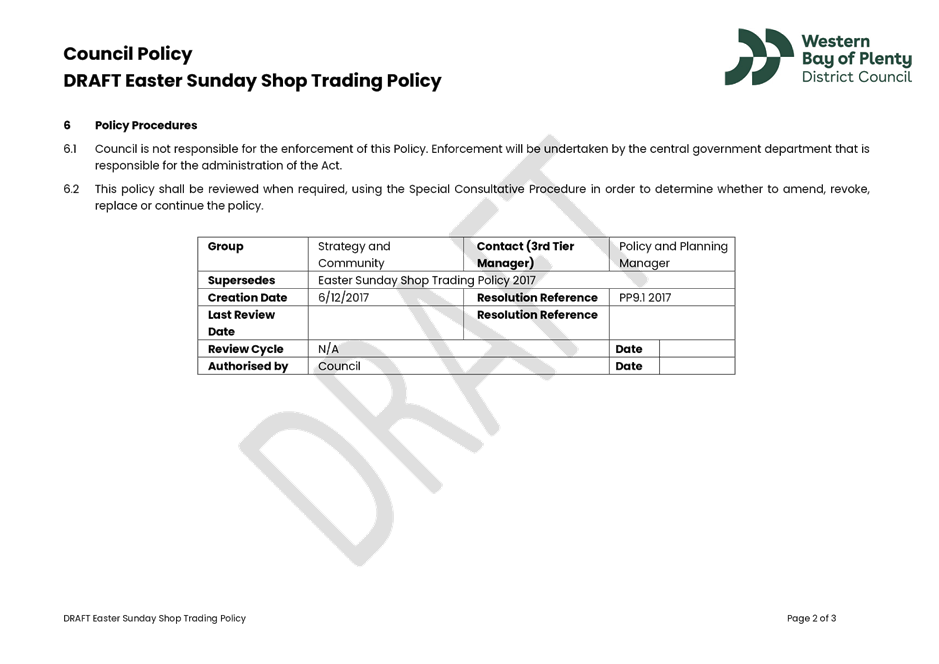
The purpose of this report is to outline the review requirements of the Easter Sunday Shop Trading Policy and adopt the statement of proposal for consultation as set out in Attachment 1.
|
1. That the Senior Policy Analyst’s report dated 25 July 2024 titled ‘Review of Easter Sunday Shop Trading Policy 2024’ be received. 2. That the report relates to an issue that is considered to be of medium significance in terms of Council’s Significance and Engagement Policy. 3. That the Draft Easter Sunday Shop Trading Policy 2024 and Statement of Proposal, as set out in Attachment 1 of this report, shall be adopted for the purpose of consultation from 5 August 2024 – 6 September 2024. 4. That the Chief Executive is authorised to make any required editorial changes to the draft Easter Sunday Shop Trading Policy or Statement of Proposal. |
Background
1. The Shop Trading Hours Act 1990 (“the Act”) was amended on 30 August 2016 to enable territorial authorities to adopt a policy to allow shop trading in their districts on Easter Sunday. The Act does not change any of the other restricted trading days (being Good Friday, ANZAC Day or Christmas Day), nor does it remove employee’s rights to choose not to work on Easter Sunday.
2. Council adopted an Easter Sunday Shop Trading Policy on 6 December 2017 allowing businesses to trade on Easter Sunday if they wish. Since this policy was adopted, the only issue raised has been confusion about whether a business can open or not, not if they should.
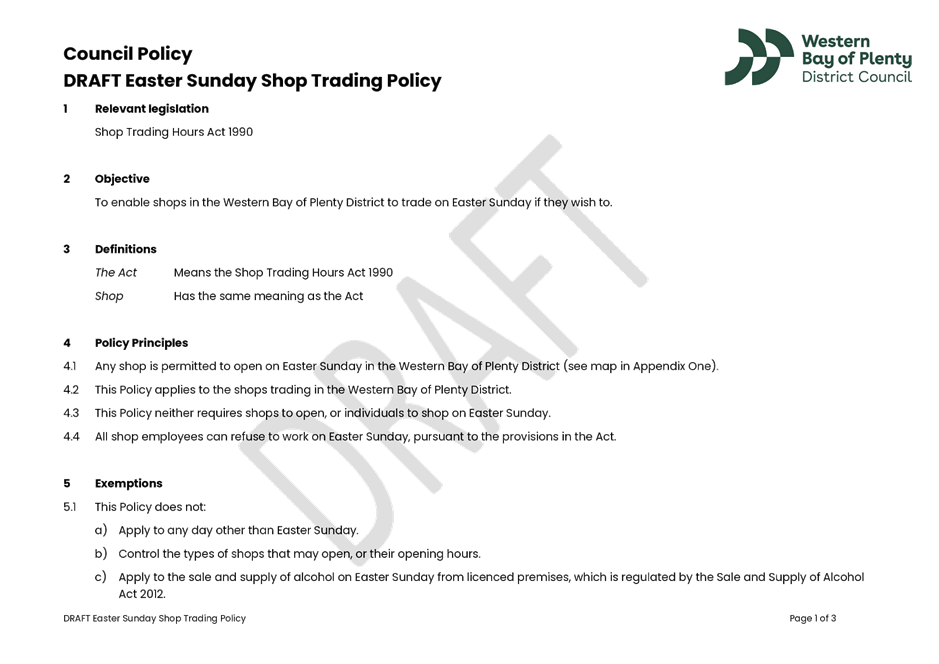
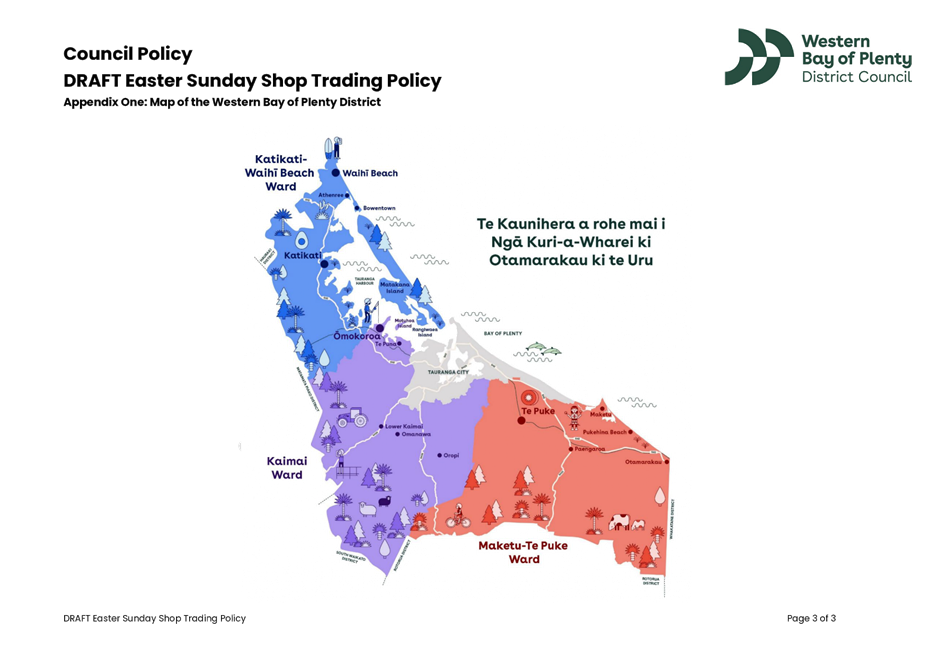
3. A statement of proposal is set out in Attachment 1 together with a draft policy, with the preferred option being keeping the policy as it is. The only change proposed to the draft policy from the current Easter Sunday Shop Trading Policy is updating the Western Bay of Plenty District map.
Shop Trading Hours Act requirements
4. The Act states that territorial authorities may have a local Easter Sunday Shop Trading Policy, either within the whole of its district, or any part or parts of its district.
5. If a policy is not adopted, then the exemptions of which shops may remain open on Easter Sunday under Section 4 of the Shop Trading Hours Act, will still apply. Generally, this includes:
· Small shops only selling food, drink, personal items, fuel and automotive needs;
· Souvenir and duty free shops;
· Prepared/cooked food for immediate consumption;
· Book, newspaper, magazine stores at public transport terminals;
· Pharmacies;
· Garden
centres.
6. The policy cannot define specific opening hours or determine what types of retailers may open. The policy can also not control or override shop trading provisions in any other legislation, such as restrictions made under the Sale and Supply of Alcohol Act 2012. If a venue cannot currently sell alcohol on Easter Sunday, this policy will not change that.
7. The Act allows employees to refuse to work on Easter Sunday without providing a reason to their employer, only that the employer must be notified of the employee’s decision.
8. Having a policy does not change any of the requirements relating to Good Friday. Shop trading on Good Friday continues to be a restricted trading day under the Act.
9. There is a current Members Bill before Parliament, which if passed, would remove the need for a policy and allow for trade. The Bill would also remove the restrictions around the sale and supply of alcohol on Good Friday and Easter Sunday. At the time of writing this paper, the select committee has not sought submissions on the Bill.
Policy review requirements
10. The Act requires the policy to be reviewed every five years (with a two-year grace period) or the policy will be revoked. To avoid our policy lapsing, we would need to complete the review by 6 December 2024.
11. When reviewing the policy, we are required to use the special consultative procedure to decide whether to amend, revoke, replace or continue the policy without amendment.
12. Under the Act Council is unable to delegate the adoption of an Easter Sunday Trading Policy to Committee. Therefore, the Strategy and Policy Committee can only recommend to Council whether or not to adopt a policy.
Neighbouring councils’ approaches
13. Tauranga City Council, Rotorua Lakes Council, Whakatāne District Council, Matamata-Piako District Council and Hauraki District Council all have Easter Sunday Shop Trading policies that are the same as our current approach, which is allowing trade throughout their districts on Easter Sunday.
Significance and Engagement
14. The Local Government Act 2002 requires a formal assessment of the significance of matters and decision in this report against Council’s Significance and Engagement Policy. In making this formal assessment there is no intention to assess the importance of this item to individuals, groups, or agencies within the community and it is acknowledged that all reports have a high degree of importance to those affected by Council decisions.
15. The Policy requires Council and its communities to identify the degree of significance attached to particular issues, proposals, assets, decisions, and activities.
16. In terms of the Significance and Engagement Policy this decision is considered to be of medium significance as the policy has been in place since 2017, with little to no complaint or concerns raised. The review is a legislative requirement. Targeted consultation with our shop owners and church groups will be undertaken.
Engagement, Consultation and Communication
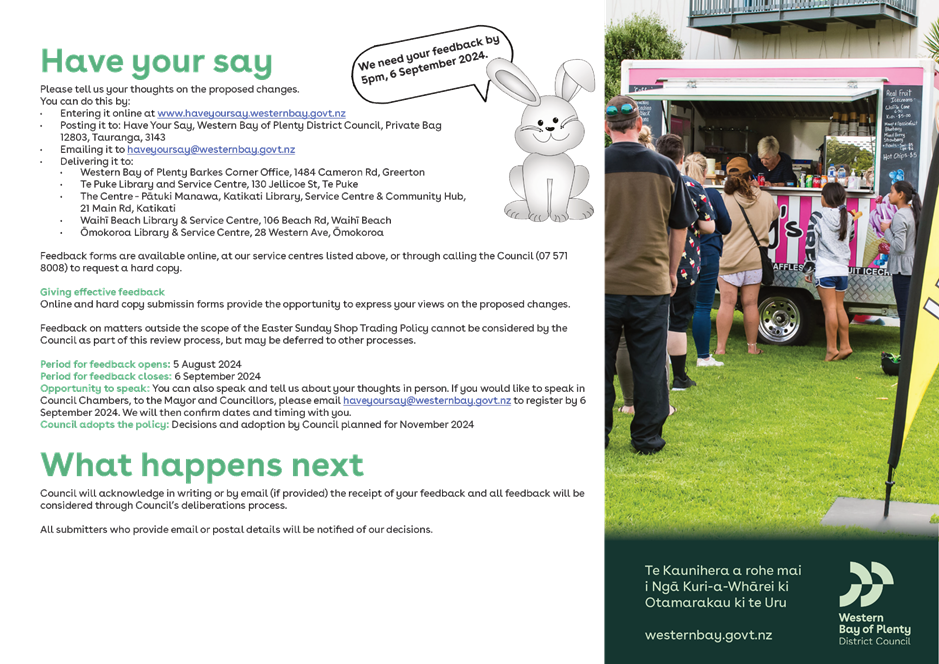
17. We are required to adopt a statement of proposal, seek public feedback for one month and allow for the opportunity for spoken interaction, in accordance with s83 of the Local Government Act 2002.
|
Interested/Affected Parties |
Planned Consultation |
||
|
Interested parties/groups |
Public consultation would then occur between 5 August to 6 September, followed by Strategy and Policy Committee deliberations in October. Shop owners and church groups will be directly notified of the consultation.
|
Planned |
Completed |
|
General Public |
|||
Issues and Options Assessment
18. Through consultation on the draft policy in 2017, 54 submissions were received. 36 (67%) supported the policy, and 18 (33%) opposed the policy. Of the supportive submissions, two (6%) submitted that the policy should apply to only parts of the district (generally being town centres), while the remaining 94% of supportive submissions agreed that the policy should cover the entire district.
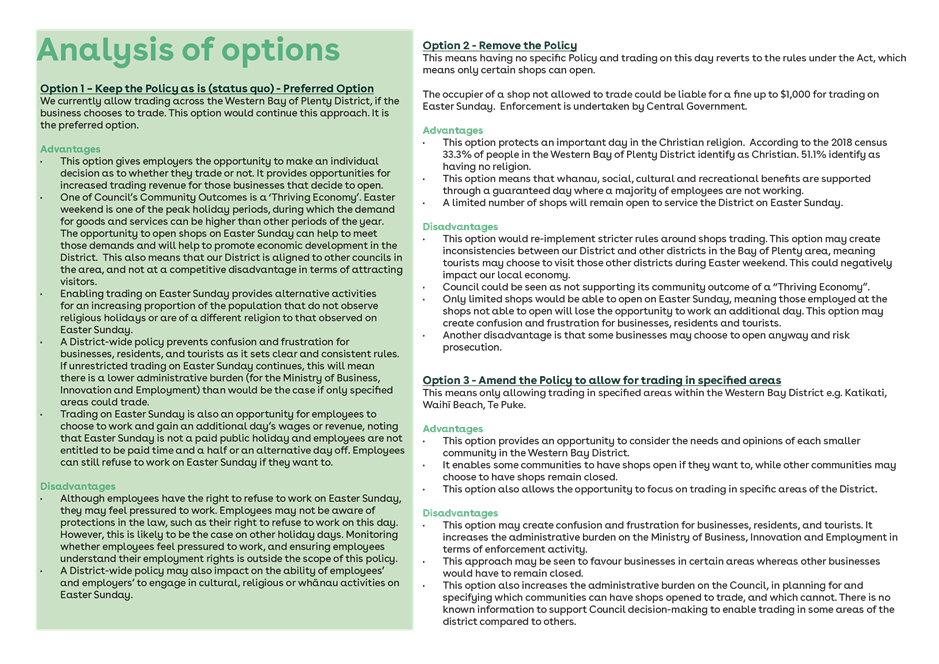
19. There are three options available to review the policy:
(a) Keep the Policy as is (the preferred option).
(b) Remove the Policy.
(c) Amend the Policy to allow for trading in specified areas.
The advantages and disadvantages of each option are set out below and are set out in the Statement of Proposal in Attachment 1.
|
Option A: Continue with the current policy approach (preferred option and set out in Attachment 1) This means allowing trading across the Western Bay of Plenty District on Easter Sunday. |
|
|
Advantages This option gives employers the opportunity to make an individual decision as to whether they trade or not. It provides opportunities for increased trading revenue for those businesses that decide to open. One of Council’s Community Outcomes is a ‘Thriving Economy’. Easter weekend is one of the peak holiday periods, during which the demand for goods and services can be higher than other periods of the year. The opportunity to open shops on Easter Sunday can help to meet those demands and will help to promote economic development in the District. This also means that our District is aligned to other councils in the area, and not at a competitive disadvantage in terms of attracting visitors.
Enabling trading on Easter Sunday provides alternative activities for an increasing proportion of the population that do not observe religious holidays, or are of a different religion to that observed on Easter Sunday.
A District-wide policy prevents confusion and frustration for businesses, residents, and tourists as it sets clear and consistent rules. If unrestricted trading on Easter Sunday continues, this will mean there is a lower administrative burden (for the Ministry of Business, Innovation and Employment) than would be the case if only specified areas could trade.
Trading on Easter Sunday is also an opportunity for employees to choose to work and gain an additional day’s wages or revenue, noting that Easter Sunday is not a paid public holiday and employees are not entitled to be paid time and a half or an alternative day off. Employees can still refuse to work on Easter Sunday if they want to. |
Disadvantages Although employees have the right to refuse to work on Easter Sunday, they may feel pressured to work. Employees may not be aware of protections in the law, such as their right to refuse to work on this day. However, this is likely to be the case on other holiday days. Monitoring whether employees feel pressured to work, and ensuring employees understand their employment rights is outside the scope of this policy.
A District-wide policy may also impact on the ability of employees and employers to engage in cultural, religious or whānau activities on Easter Sunday. |
|
Option B: Remove the policy. This means having no specific Policy and trading on this day reverts to the rules under the Shop Trading Hours Act 1990, and therefore only certain shops can open. |
|
|
Advantages This option protects an important day in the Christian religion. According to the 2018 census 33.3% of people in the Western Bay of Plenty District identify as Christian. 51.1% identify as having no religion.
This option means that whanau, social, cultural and recreational benefits are supported through a guaranteed day where a majority of employees are not working.
A limited number of shops will remain open to service the District on Easter Sunday. |
Disadvantages This option would re-implement stricter rules around shops trading. This option may create inconsistencies between our District and other districts in the Bay of Plenty area, meaning tourists may choose to visit those other districts during Easter weekend. This could negatively impact our local economy.
Council could be seen as not supporting its community outcome of a “Thriving Economy.”
Only limited shops would be able to open on Easter Sunday, meaning those employed at the shops not able to open will lose the opportunity to work an additional day. This option may create confusion and frustration for businesses, residents and tourists.
Another disadvantage is that some businesses may choose to open anyway and risk prosecution. |
|
Option C: Amend the Policy to allow for trading in specified areas. This means only allowing trading in specified areas within the Western Bay of Plenty District. |
|
|
Advantages This option provides an opportunity to consider the needs and opinions of each smaller community in the Western Bay District.
It enables some communities to have shops open if they want to, while other communities may choose to have shops remain closed.
This option also allows the opportunity to focus on trading in specific areas of the District.
|
Disadvantages This option may create confusion and frustration for businesses, residents and tourists. It increases the administrative burden on the Ministry of Business, Innovation and Employment in terms of enforcement activity.
This approach may be seen to favour businesses in certain areas, whereas other businesses would have to remain closed.
This option also increases the administrative burden on the Council, in planning for and specifying which communities can have shops opened to trade, and which cannot. There is no known information to support Council decision-making to enable trading in some areas of the district compared to others. |
20. A statement of proposal is set out in Attachment 1, which has our preferred option being the continuation of the current approach (allowing trading on Easter Sunday).
|
Option A That the Committee adopt the Draft Easter Sunday Shop Trading Policy and Statement of Proposal (as set out in Attachment 1) for public consultation. |
|
|
Assessment of advantages and disadvantages including impact on each of the four well-beings · Economic · Social · Cultural · Environmental
|
Meets the legislative requirements of the Act. Allows for the opportunity to hear from the community on the policy options. |
|
Option B That the Committee does not adopt the Draft Easter Sunday Shop Trading Policy and Statement of Proposal (as contained in Attachment 1) for public consultation |
|
|
Assessment of advantages and disadvantages including impact on each of the four well-beings · Economic · Social · Cultural · Environmental |
Allows for further consideration of the options. May result in not being able to adopt a new policy before Easter 2025, which may increase confusion regarding the rules or that shops may be unable to trade on Easter Sunday. |
Statutory Compliance
21. The recommendations in this report meets the requirements of the Local Government Act 2002 and the Shop Trading Act 1990.
Funding/Budget Implications
|
Budget Funding Information |
Relevant Detail |
|
Review of Easter Sunday Shop Trading Policy |
All costs associated with the consultation on the Easter Sunday Shop Trading Policy are included in current budgets. |
1. Draft
Easter Sunday Shop Trading Policy and Statement of Proposal ⇩ 
|
25 July 2024 |
10.2 Submission on the International Visitor Conservation and Toursim Levy 2024
File Number: A6378701
Author: Ariell King, Strategic Advisor: Legislative Reform and Special Projects
Authoriser: Rachael Davie, Deputy CEO/General Manager Strategy and Community
Executive Summary
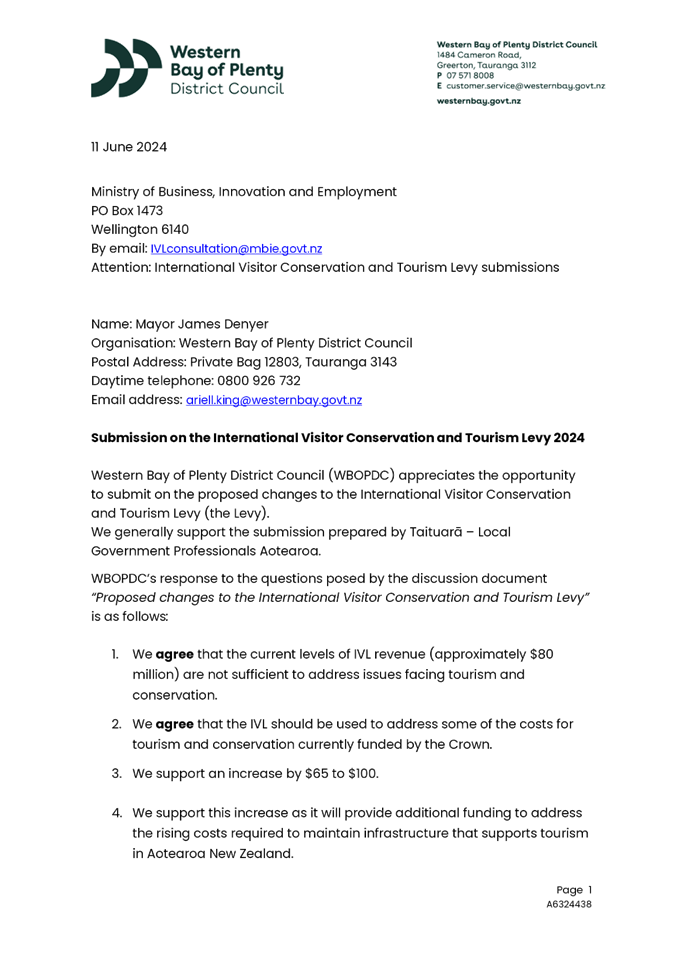
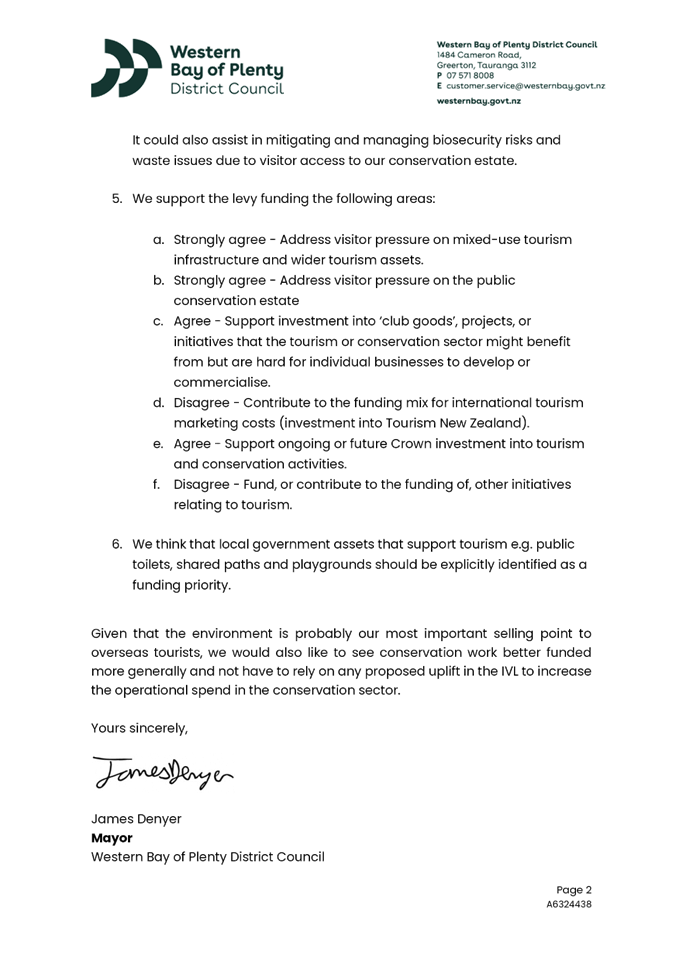
For the information of the Strategy and Policy Committee, this report presents a submission made by the Western Bay of Plenty District Council on the following matter:
(a) International Visitor Conservation and Tourism Levy 2024.
|
1. That the Strategic Advisor: Legislative Reform and Special Projects report dated 25 July 2024 titled ‘Submission on the International Visitor Conservation and Tourism Levy 2024’ be received. 2. That the submission, shown as Attachment 1 to this report, is received by the Strategy and Policy Committee and the information is noted. |
1. Submission
on the International Visitor Conservation and Tourism Levy 2024 ⇩ 
|
25 July 2024 |
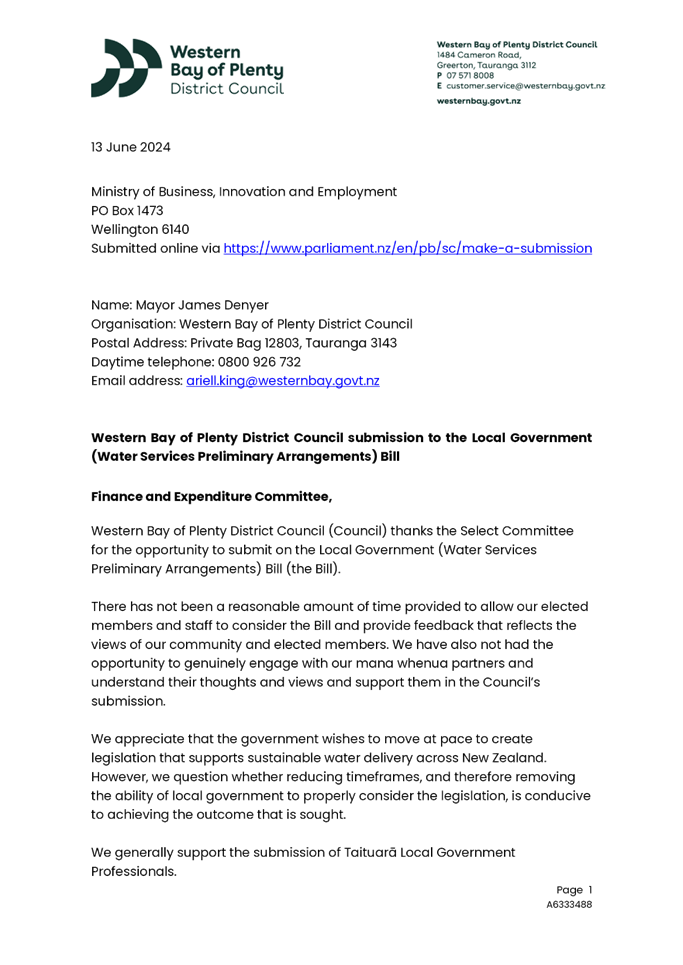
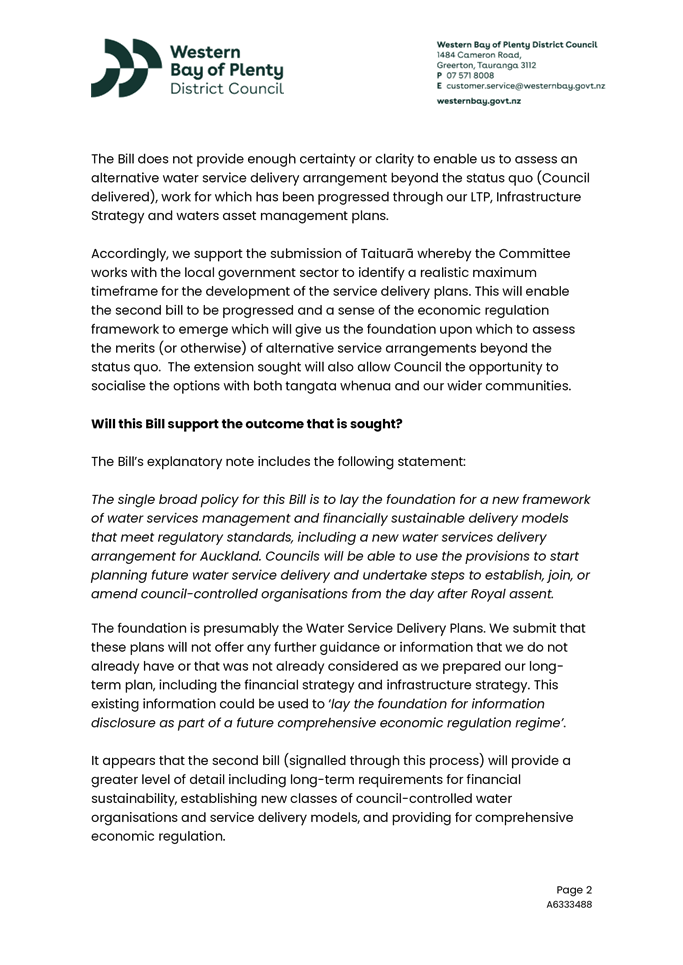
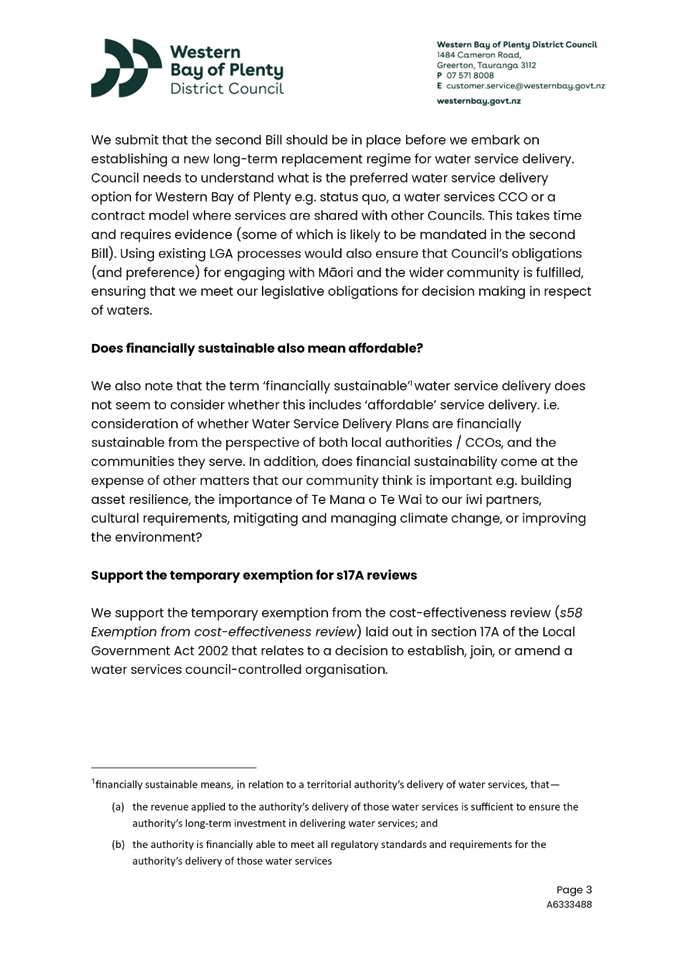
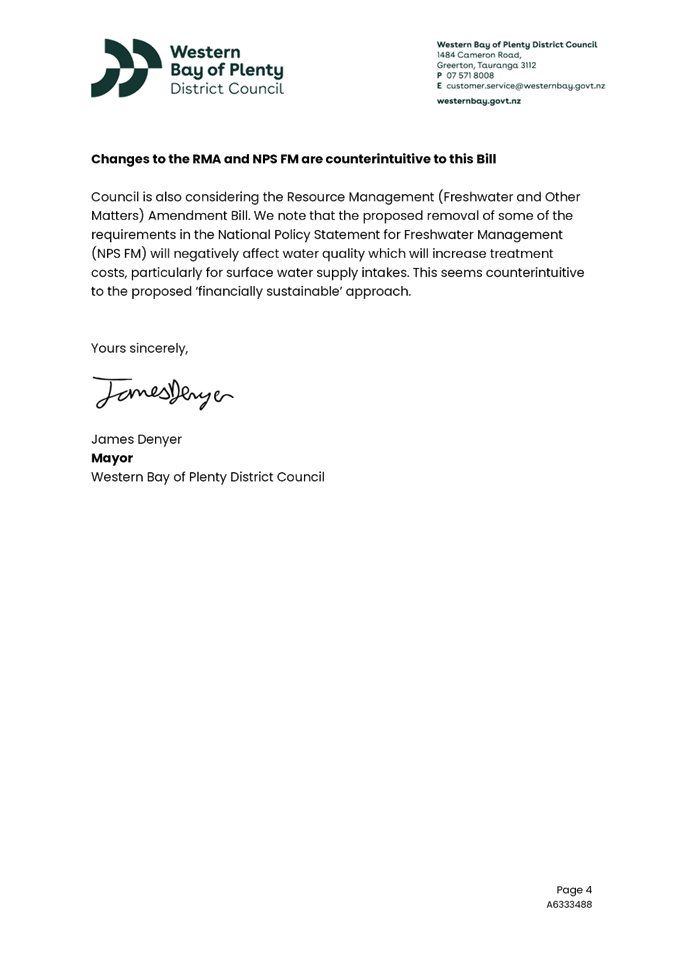
10.3 Submission on the Local Government (Water Services Preliminary Arrangements) Bill, June 2024
File Number: A6378725
Author: Ariell King, Strategic Advisor: Legislative Reform and Special Projects
Authoriser: Rachael Davie, Deputy CEO/General Manager Strategy and Community
Executive Summary
For the information of the Strategy and Policy Committee, this report presents a submission made by the Western Bay of Plenty District Council on the following matter:
(a) Submission on the Local Government (Water Services Preliminary Arrangements) Bill, June 2024.
|
1. That the Strategic Advisor: Legislative Reform and Special Projects report dated 25 July 2024 titled ‘Submission on the Local Government (Water Services Preliminary Arrangements) Bill, June 2024’ be received. 2. That the submission, shown as Attachment 1 to this report, is received by the Strategy and Policy Committee and the information is noted. |
1. Western
Bay of Plenty District Council submission to the Local Government (Water
Services Preliminary Arrangements) Bill ⇩
|
25 July 2024 |
10.4 Submission on the draft Land Transport Rule - Setting of the Speed Limits 2024
File Number: A6391831
Author: Katy McGinity, Senior Policy Analyst
Authoriser: Cedric Crow, General Manager Infrastructure Services
Executive Summary
For the information of the Strategy and Policy Committee, this report presents a submission made by Western Bay of Plenty District Council on the following matter:
(a) Draft Land Transport Rule – Setting of Speed Limits 2024.
|
1. That the Senior Policy Analyst’s report dated 25 July 2024 titled ‘Submission on the Draft Land Transport Rule – Setting of Speed Limits 2024’ be received. 2. That the submission, shown as Attachment 1 to this report, be received by the Strategy and Policy Committee and the information noted. |
1. Submission
on the Draft Land Transport Rule - Setting of Speed Limits 2024 ⇩